DevOps Transformation: How Modern Pipelines Drive Results for UAE Businesses
January 23, 2026

Ayush Kanodia

There are few places in the world experiencing digital transformation at the same rate as the United Arab Emirates. With the government leading smart city initiatives and cloud-first mandates in finance, healthcare, logistics, and retail, businesses are being relentlessly pressured to innovate at pace while keeping security, compliance, and reliability. In such an environment, DevOps transformation is no longer simply a technical upgrade but rather a critical strategic business imperative.
DevOps transformation in the UAE centers on the creation of modern automated Continuous Integration/Continuous Deployment (CI/CD) pipelines, the use of cloud-native infrastructure, and the embedding of security and compliance within the software delivery life cycle. With the right DevOps strategies in place, organizations are able to deliver software more quickly and scale with confidence, all while lowering operational risk and supporting the alignment of technology delivery and digital initiatives such as the UAE Vision 2030.
On a global scale, DevOps has reached a tipping point. More than 96% of technology professionals cite the use of DevOps to some extent with the global DevOps market expected to exceed $59 billion by 2032. UAE businesses, however, are not simply following the trend. They are leading it by integrating DevOps with cloud transformation, automation, and AI-powered operations.
This guide examines the impact of contemporary DevOps pipelines on UAE businesses, the particularities of DevOps transformation in the region, and the role of DevOps services in UAE in assisting organizations to implement them successfully.
What DevOps Transformation Means Today?
DevOps encompasses more than just tools and automation; it also entails significant change. At the core of DevOps transformation is the change in the software building, testing, deploying, and operational processes. This change focuses on speed, reliability, collaboration, and improvement.
In the traditional IT model, the development and operations teams worked in isolation (silos). The cycle of coding hands over late, testing that is manual, and deploying where risks exist and failures are common. Modern DevOps replaces this with automation and shared ownership on continuous integration, continuous testing, and continuous delivery.
For UAE Enterprises operating at Scale, DevOps Transformation Means:
- Swift Digital Service Deployment
- Reduced risks in production
- Enhanced synchronization of business objectives and IT execution
- Improved security & compliance
Why DevOps Matters Now for UAE Businesses
The digital economy in the UAE is advancing rapidly. Enterprises are leveraging cloud platforms (Azure, AWS), are making data-driven decisions, and are expanding their digital services across countries. Customers are demanding always-on services, frictionless journeys, and regular updates on functionalities.
UAE organizations also owe these challenges to:
- Criminal charges if they violate regulatory requirements
- Saying no to high availability
- Complicating things further with multi-cloud and hybrid infrastructures
- The DevOps talent drought
The confidence to tackle these DevOps challenges in the UAE comes from the ability to deal with complex systems.
The Modern Pipeline: From Code to Customer
Modern DevOps pipelines automate the entire journey from code commit to production deployment. Instead of relying on manual handoffs, pipelines ensure that every change is built, tested, secured, and deployed in a controlled and repeatable way.
This pipeline-driven approach is the foundation for scalable digital transformation in the UAE.
Building the Modern DevOps Pipeline
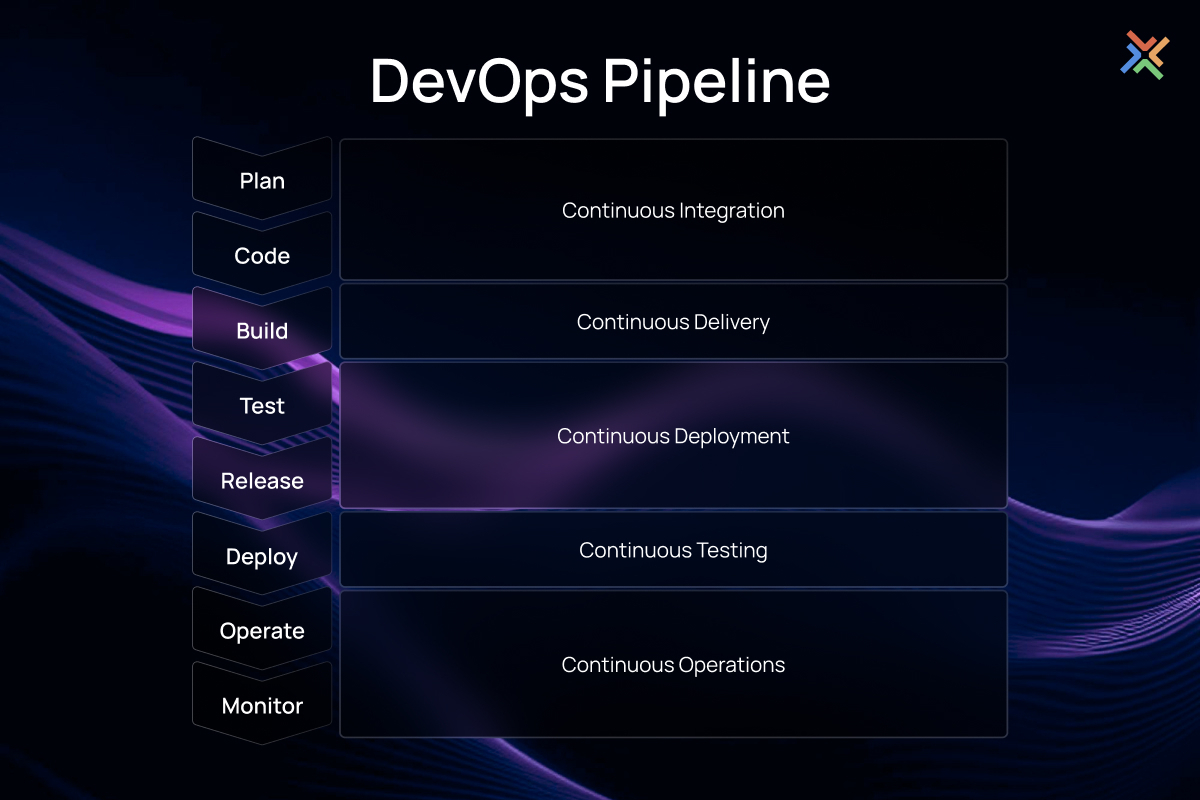
A modern DevOps pipeline is not a single tool—it is an integrated system of practices, automation, and feedback loops designed to deliver software safely and efficiently.
Continuous Integration (CI): Automated Builds & Code Merging
Continuous Integration ensures that every code change is automatically merged, built, and validated. Developers commit small changes frequently, reducing integration conflicts and catching issues early.
For UAE businesses with distributed teams and complex systems, CI provides:
- Early detection of defects
- Faster development cycles
- Consistent build environments
CI tools such as Jenkins, GitLab CI, and Azure DevOps form the backbone of DevOps development services in the UAE.
CI reduces deployment failures caused by last-minute integrations, a common challenge in large enterprise environments.
Continuous Testing (CT): Shift-Left Security & Quality
Testing is no longer a final checkpoint. In modern DevOps pipelines, testing happens continuously—from unit tests to security scans and performance checks.
By shifting testing left, UAE organizations:
- Detect vulnerabilities earlier
- Improve software quality
- Reduce post-release incidents
Automated testing is particularly critical in regulated sectors such as finance and healthcare, where failures can have serious consequences.
Continuous Delivery / Deployment (CD): Fast, Reliable Releases
Continuous Delivery ensures that validated code is always ready for release. Continuous Deployment goes one step further by automatically pushing changes to production.
In the UAE, where businesses compete on speed and experience, CD enables:
- Faster time-to-market
- Reduced downtime
- Safer releases with rollback capabilities
Modern pipelines support blue-green deployments, canary releases, and feature toggles—minimizing risk while accelerating innovation.
Infrastructure as Code (IaC): Managing Environments with Code
Infrastructure as Code replaces manual infrastructure provisioning with code-driven automation. Tools like Terraform, CloudFormation, and Ansible allow teams to define infrastructure in version-controlled templates.
For enterprises adopting cloud and DevOps services in UAE:
- IaC ensures consistency across environments
- Reduces configuration drift
- Enables rapid scaling and recovery
IaC is especially valuable in multi-cloud and hybrid setups common across the UAE.
Monitoring & Feedback: Observability, Logging, & Incident Response
DevOps does not end at deployment. Continuous monitoring provides real-time visibility into application health, performance, and user experience.
- Modern observability tools help UAE businesses:
- Detect issues before users are impacted
- Improve incident response times
- Make data-driven optimization decisions
Feedback loops between production and development teams are essential for continuous improvement.
DevSecOps Integration: Embedding Security into Every Stage
Security cannot be an afterthought—especially in the UAE’s regulated environment. DevSecOps integrates security checks directly into CI/CD pipelines.
This includes:
- Automated vulnerability scanning
- Compliance validation
- Secrets management
By embedding security early, organizations reduce risk without slowing delivery.
AI & Machine Learning in Pipelines: Smarter, Predictive Operations
AI is transforming DevOps pipelines by enabling:
- Predictive failure detection
- Intelligent alerting
- Automated remediation
AI-driven DevOps helps UAE enterprises manage complexity at scale, particularly in cloud-native environments.
Platform Engineering: Internal Developer Platforms
Platform Engineering introduces Internal Developer Platforms (IDPs) that standardize tooling, workflows, and infrastructure access.
For large UAE organizations, IDPs:
- Improve developer experience
- Reduce cognitive load
- Accelerate onboarding
Platform engineering is emerging as a key trend in advanced DevOps transformations.
Delivering Measurable Business Impact in the UAE
DevOps transformation delivers tangible business outcomes—not just technical improvements.
Faster Time-to-Market: Agility in a Dynamic Region
Automated pipelines allow UAE businesses to release features faster and respond quickly to market demands. This agility is critical in sectors such as fintech, e-commerce, and logistics.
Enhanced Reliability & Stability: Stable Platforms for Critical Services
Automation, testing, and monitoring reduce failures and downtime. This reliability is essential for government platforms, financial systems, and customer-facing services.
Improved Collaboration & Innovation: Breaking Silos
DevOps fosters shared ownership between development, operations, and security teams. This collaboration accelerates innovation and improves alignment with business goals.
Cost Optimization: Efficient Resource Usage
Automation reduces manual effort, minimizes rework, and optimizes cloud usage resulting in lower operational costs over time.
Real-World UAE Case Studies
Finance: Secure, compliant pipelines for faster product launches
E-Commerce: Automated testing and deployment for daily releases
Government: Highly available platforms supporting smart city initiatives
Overcoming Transformation Challenges in UAE Enterprises
UAE businesses face unique DevOps adoption hurdles, from cultural shifts to legacy systems, but strategic planning and modern tools make transformation achievable.
Cultural Resistance
DevOps requires a mindset shift. Teams accustomed to silos may resist collaboration, and operations staff might feel threatened by automation. Overcoming cultural resistance involves leadership support, structured training, and internal evangelism. Dubai fintech firms, for example, have successfully reduced deployment errors by promoting cross-team workshops and showcasing quick wins.
Skill Gaps
Many UAE enterprises face shortages in DevOps skills. Investing in continuous learning, certifications, and mentoring programs ensures teams can handle CI/CD pipelines, IaC, and DevSecOps practices effectively.
Toolchain Complexity
A complex mix of tools can overwhelm teams and hinder adoption. Rationalizing your DevOps toolstack—selecting CI/CD, monitoring, infrastructure, and security tools that integrate seamlessly—is essential for smooth operations.
Security Integration
Embedding security at every stage (DevSecOps) ensures that AI compliance and risk mitigation are part of the development lifecycle, rather than afterthoughts. Automated security scans and governance tools are crucial, especially in finance, healthcare, and government sectors in the UAE.
Legacy Systems
Many organizations still rely on legacy systems. A gradual hybrid approach, containerization (Docker, Kubernetes), and incremental modernization allow UAE businesses to implement DevOps without disrupting existing operations.
Best Practices for UAE Adoption
Adopting DevOps successfully in the UAE involves:
- Clear Business Goals: Align pipelines with objectives such as speed, quality, and cost efficiency.
- Incremental Automation: Start with CI/CD for a single application, then expand to IaC, testing, and security.
- Collaboration and Feedback: Foster cross-functional teams and continuous feedback loops.
- Measure Outcomes: Use KPIs like deployment frequency, lead time, and failure rate to guide improvements.
The Future of DevOps in the Middle East
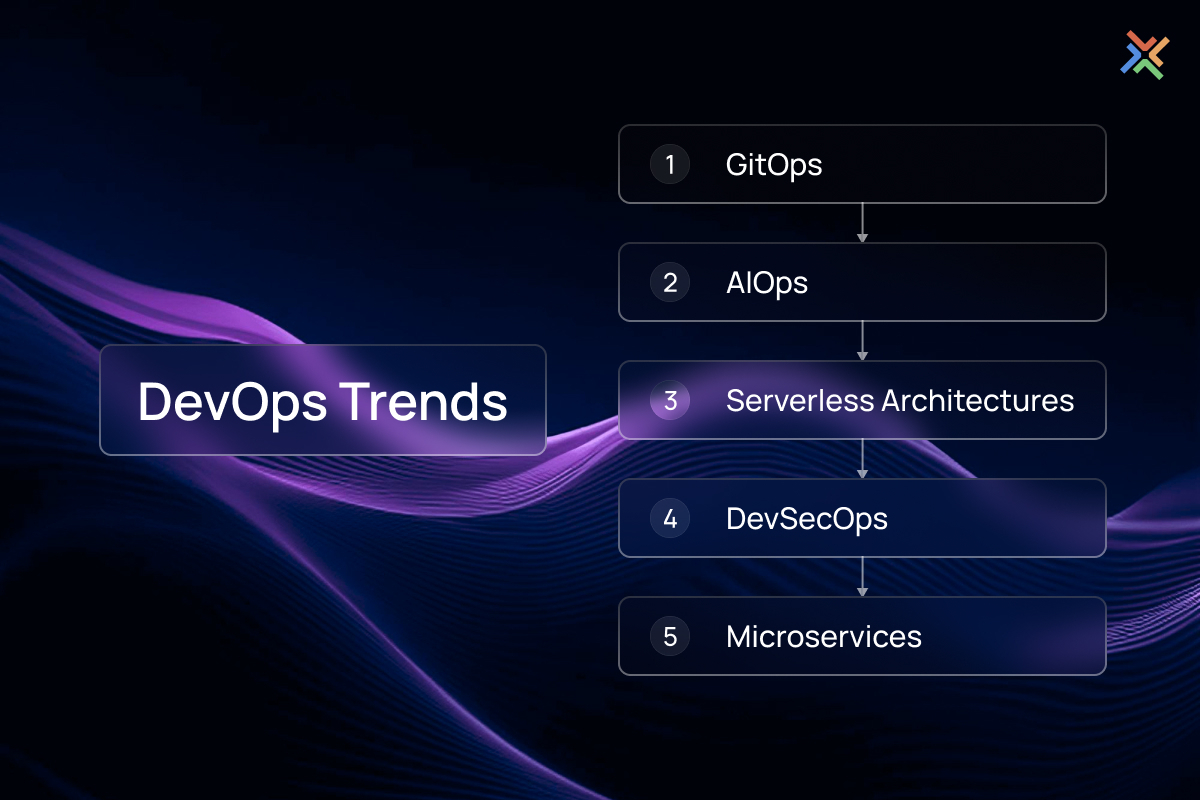
DevOps is evolving rapidly in the region, with AI development, cloud-native strategies, and automation reshaping how UAE enterprises deliver software efficiently, securely, and at scale.
AI/ML-Driven Automation
AI and ML are increasingly central to pipelines. Predictive analytics, anomaly detection, and automated optimization reduce downtime and increase efficiency, particularly in multi-cloud environments.
Platform Engineering
Internal Developer Platforms (IDPs) empower developers to deploy and manage applications without manual infrastructure handling. Benefits include reduced bottlenecks, standardized governance, and enhanced developer experience.
Self-Service Developer Platforms
Self-service platforms complement platform engineering by enabling teams to deploy, test, and monitor applications independently while maintaining oversight and compliance.
Serverless Architectures
Serverless computing removes infrastructure management from developers’ responsibilities, automatically scaling workloads, reducing operational overhead, and lowering costs.
Cloud-Native Adoption
Microservices and containerized applications deployed in cloud-native environments (Kubernetes, Docker) improve flexibility, resilience, and speed of delivery for UAE enterprises.
Multi-Cloud DevOps
Orchestrating deployments across AWS, Azure, and private clouds ensures flexibility, disaster recovery, and operational resilience in UAE enterprises with global or regional footprints.
Compliance-First Automation
Integrating compliance checks directly into pipelines ensures organizations meet UAE regulations and global standards without slowing down development.
Developer Experience Optimization
Simplifying deployment, monitoring, and testing workflows improves productivity, reduces errors, and attracts top talent in competitive UAE tech markets.
Empowering UAE Businesses with DevOps Services at WDCS
DevOps transformation is no longer optional for UAE businesses—it is foundational to digital maturity. By adopting modern pipelines, cloud-native infrastructure, and DevSecOps practices, organizations can achieve faster delivery, stronger security, and sustainable growth.
As a trusted DevOps consulting company in UAE, WDCS empowers enterprises to design, implement, and scale DevOps transformations that drive tangible business outcomes.
From cloud and DevOps services in UAE to supporting organizations in hiring skilled DevOps developers in UAE, we provide the expertise and guidance needed for successful digital transformation. Contact us today to discover how WDCS can accelerate your DevOps journey and deliver measurable results for your business.
FAQs: Common Questions About DevOps in UAE
1. How can DevOps help UAE businesses achieve compliance with local regulations?
DevOps enables automated compliance checks in CI/CD pipelines, ensuring code, infrastructure, and data management meet UAE-specific standards like data sovereignty and cybersecurity without slowing delivery.
2. What role does cloud adoption play in successful DevOps transformation in the UAE?
Cloud platforms like Azure, AWS, and Oracle provide scalability, automation, and integration tools essential for modern DevOps pipelines, enabling faster provisioning, efficient resource use, and seamless CI/CD workflows.
3. How do DevOps practices impact customer experience in UAE companies?
By accelerating deployments and improving software reliability, DevOps ensures faster updates, fewer errors, and better application performance, directly enhancing user satisfaction.
4. Can small and medium-sized UAE businesses implement DevOps effectively?
Yes. With incremental adoption, automation-first strategies, and support from DevOps consulting companies in the UAE, SMBs can start small with CI/CD pipelines and test automation, achieving efficiency without large upfront costs.
5. How does AI and automation enhance DevOps pipelines in the UAE context?
AI-driven analytics can predict bottlenecks, optimize deployment schedules, and monitor system health proactively. Automation reduces manual intervention, accelerates releases, and ensures consistent quality—vital for UAE organizations.
6. How can UAE enterprises measure the ROI of DevOps transformation?
ROI can be tracked through deployment frequency, lead time for changes, mean time to recovery (MTTR), defect rates, operational cost savings, and
Transform Your UAE Business with Expert DevOps Services
Ready to accelerate your software delivery, improve collaboration, and secure your operations? WDCS offers end-to-end DevOps services in UAE, including CI/CD automation, DevSecOps integration, cloud migration, and Infrastructure-as-Code. Partner with us to streamline workflows, reduce operational costs, and scale your business confidently in the digital era.