Sustainable Web Design: Reducing Digital Carbon Footprint in the UAE
March 13, 2026

Ayush Kanodia
.jpg?w=1920&q=75)
Digital consumption is soaring worldwide, and with it comes an environmental responsibility that many businesses still overlook. Every website visit requires energy servers, networks, and devices all contribute to carbon emissions.
Globally, the internet is responsible for roughly 3.7% of emissions, a share projected to grow as online activity intensifies. In the UAE, this is especially critical, with the government actively pursuing the Green Agenda 2030 and Net Zero by 2050 initiatives.
Sustainable web design is not just a “nice-to-have”; it is an essential strategy for reducing operational energy use, aligning with ESG goals, and demonstrating corporate responsibility. Every 1 MB of website data transfer generates approximately 0.02 grams of CO2, which, for high-traffic UAE websites, can quickly add up.
For integrating sustainability into web development, companies in the UAE can work with a trusted Web Development Company UAE to align digital strategies with national sustainability priorities while optimizing operational costs and enhancing digital performance.
Understanding Sustainable Web Design
At its core, sustainable web design focuses on creating websites that are efficient, lightweight, and low-impact. Unlike traditional web design, which may prioritize aesthetics and flashy functionality over efficiency, sustainable design emphasizes resource-conscious coding, optimized media, and minimal server load.
Every page element from images and videos to scripts and fonts—impacts energy consumption. Websites that rely heavily on uncompressed media, excessive scripts, or auto-play content increase computational demand and carbon output. Sustainable web design also ensures longevity: a well-planned site requires fewer redesigns, reducing the energy spent on constant redevelopment.
In the UAE, where mobile usage dominates, sustainable design ensures websites perform efficiently across devices, consuming less data and battery power. Moreover, as UAE businesses integrate ESG reporting into their corporate strategies, sustainability becomes a metric of brand credibility and investor confidence.
For companies seeking both environmental and business impact, sustainable web design provides measurable benefits in performance, cost, and reputation. The UAE’s digital economy is projected to grow by over 6% annually, making energy-efficient web practices a strategic priority for sustainable growth.
Essential Strategies to Reduce Your Website’s Carbon Footprint
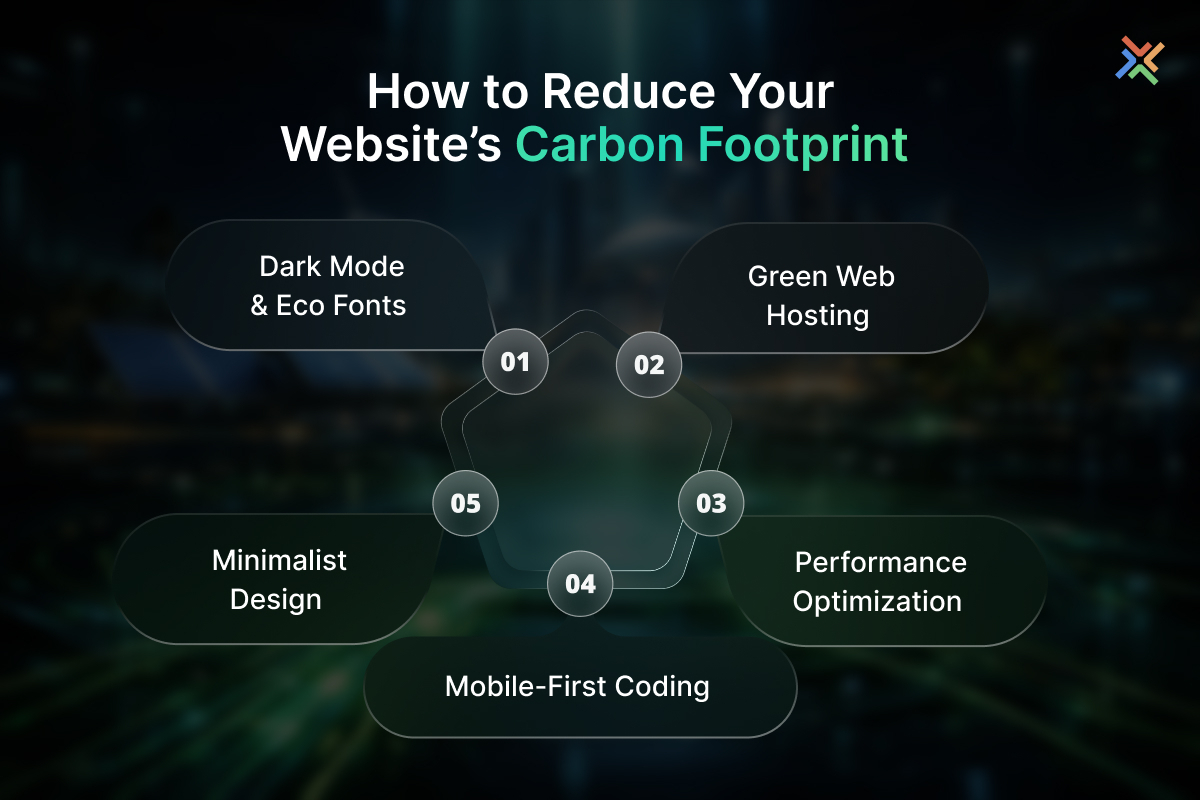
Reducing your website’s carbon footprint requires intentional design, optimized performance, and sustainable infrastructure choices that align with both environmental and business goals.
Green Web Hosting: The Foundation of Sustainability
Hosting is the backbone of any website and a major determinant of energy consumption. Traditional data centers are energy-intensive, often powered by fossil fuels and running 24/7. In contrast, green hosting providers operate data centers that rely on renewable energy sources such as solar, wind, or hydroelectric power.
Switching to renewable-powered data centers in the UAE can reduce server energy consumption by up to 50%, translating to tangible cost savings and carbon reduction. Advanced server virtualization allows multiple virtual servers to operate efficiently on a single physical machine, lowering both electricity demand and operational costs.
For UAE businesses, selecting green hosting demonstrates commitment to ESG principles and offers measurable reductions in carbon emissions. Companies like Emirates NBD and Careem have begun migrating to green hosting providers, setting benchmarks for digital sustainability in the region.
Optimizing Performance for Efficiency
Website performance directly affects energy use. Heavier websites with unoptimized images, redundant scripts, and large media files consume more bandwidth and require additional server processing, increasing carbon emissions. Performance optimization reduces these demands while improving user experience, SEO, and engagement.
Key strategies include lazy loading of images and videos, which can reduce bandwidth usage by 30–40%, and ensures media only loads as needed. File compression using formats like WebP and AVIF reduces file sizes by up to 80% without sacrificing quality. Minifying CSS, JavaScript, and HTML removes unnecessary code, improving load times and reducing CPU cycles.
Content Delivery Networks (CDNs) further optimize energy efficiency by serving content from servers located closer to users, decreasing travel distance for data and reducing server load. Combined, these strategies create faster, lighter websites with a lower digital carbon footprint.
Mobile-First Design and Efficient Coding
With mobile devices accounting for over 70% of web traffic in the UAE, mobile-first design is both a performance and sustainability priority. Designing from the smallest screens ensures that only essential content and functionality are delivered, eliminating unnecessary desktop elements that consume bandwidth and processing power. Responsive images tailored to device size further reduce data transfer and energy consumption.
Efficient coding practices reinforce this approach. Lightweight frameworks like Svelte or Astro, semantic HTML/CSS, and selective use of libraries minimize processing requirements. Developers should evaluate each dependency for its resource cost and avoid bloated plugins.
Choose the best web design and development company who provide mobile-first design with efficient coding, websites load faster, consume less energy, and offer a superior user experience. These practices align with Google’s Core Web Vitals, ensuring both environmental and SEO benefits.
Minimalist Design: “Less Is More” Approach
Minimalist web design removes unnecessary features, animations, and auto-play media, reducing server and client-side processing. Minimalism emphasizes purposeful content and intuitive navigation, ensuring that users quickly find what they need without excess digital “clutter.”
Clean layouts, clear hierarchies, and simplified navigation reduce cognitive load, keeping users engaged and reducing bounce rates. In the UAE market, where users increasingly prioritize efficiency and accessibility, minimalist design positions brands as both user-focused and environmentally responsible.
Dark Mode and Energy-Efficient Typography
Small design choices can have significant environmental effects. Dark mode reduces energy use on OLED and AMOLED screens by limiting light emission, especially on mobile devices commonly used in the UAE. This simple design adaptation can reduce energy consumption substantially, particularly for high-traffic sites.
Font choices also influence sustainability. Custom web fonts increase HTTP requests and page weight, consuming additional energy. Using system fonts or font subsetting—loading only the required character sets—reduces file sizes and resource use. These seemingly minor adjustments contribute to measurable energy savings across millions of site visits.
Best Practices for Optimizing Content and Data for Sustainability
Small design choices can have significant environmental effects. Dark mode reduces energy use on OLED and AMOLED screens by limiting light emission, particularly for mobile devices common in the UAE. Font choices also influence sustainability: custom web fonts increase HTTP requests and page weight, consuming additional energy. Using system fonts or font subsetting reduces file sizes and resource use.
Data minimization extends to user data storage. Collecting only essential information and routinely cleaning outdated assets reduces server processing requirements and energy use. Modular content structures and static site generation further enhance efficiency, ensuring that content delivery is fast, lean, and environmentally conscious.
Measuring and Monitoring Your Website’s Carbon Footprint
Sustainability requires measurement. Tools like the Website Carbon Calculator estimate CO2 emissions per page view based on hosting type, page weight, and energy sources. Monitoring metrics such as server response time, page load, and total energy use enables businesses to track improvements over time.
Integrating sustainability KPIs into regular reporting ensures accountability and long-term adherence. UAE companies can include digital carbon metrics in ESG disclosures, reinforcing corporate responsibility and providing transparency to stakeholders. Continuous monitoring allows teams to identify optimization opportunities, maintain performance, and reduce the overall digital footprint.
UAE-Specific Considerations for Sustainable Web Design
The UAE government’s commitment to sustainability extends to digital practices. National frameworks, such as the UAE Net Zero by 2050 initiative, encourage businesses to implement eco-friendly strategies across operations, including web development. Companies adopting these practices align with regulatory expectations and strengthen their ESG positioning.
Circular economy principles, such as refurbishing and recycling hardware and selecting green hosting, reduce electronic waste while supporting sustainability objectives.
By integrating environmentally responsible practices into digital strategies, UAE businesses enhance credibility with consumers, investors, and partners while contributing to national goals. Sustainable web design becomes not just an operational choice, but a strategic differentiator in a competitive market.
Business Benefits of Sustainable Web Design
Implementing sustainable web design delivers tangible advantages beyond environmental impact. Optimized websites load faster, improving user engagement and conversion rates. Studies indicate that even a one-second delay can reduce conversions by 7%, highlighting the direct business value of performance optimization.
Sustainability also positively affects search engine rankings. Google rewards fast, efficient websites, making eco-friendly design an organic SEO advantage. Operational costs decrease as bandwidth and server demands drop, particularly when combined with energy-efficient hosting.
From a brand perspective, sustainable websites signal innovation, responsibility, and forward-thinking leadership. For UAE businesses, where ESG alignment is increasingly scrutinized by stakeholders, digital sustainability strengthens reputation and builds trust with eco-conscious customers. The cumulative effect is a website that delivers improved performance, reduced operational cost, and a meaningful contribution to corporate ESG objectives.
Emerging Future Trends in Eco‑Friendly Web Development
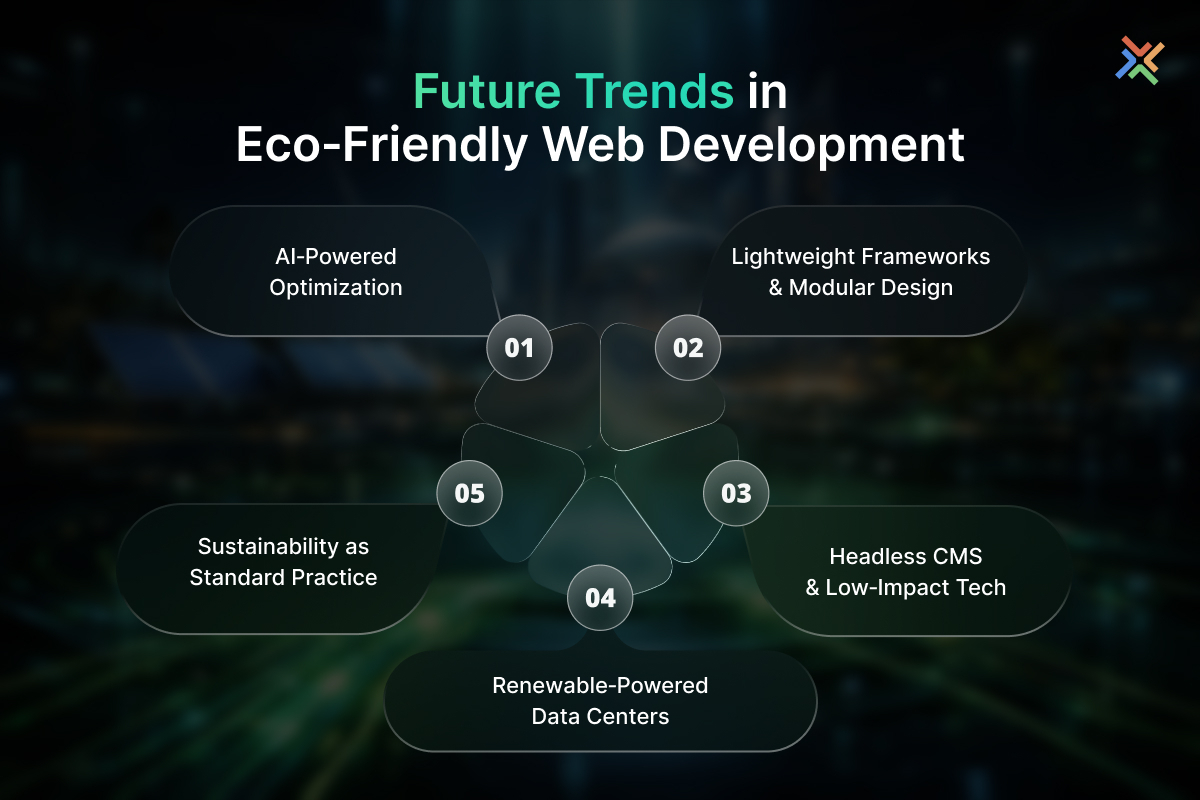
The future of sustainable web development is shaped by technology, business priorities, and evolving UAE regulations. Early adoption of eco-friendly practices offers operational efficiency, regulatory compliance, and enhanced brand reputation.
AI‑Powered Optimization
Machine learning can automatically compress images, minify code, and optimize performance, reducing energy consumption beyond manual methods. For UAE businesses with high mobile traffic, AI ensures faster load times and lower carbon footprints.
Lightweight Frameworks and Modular Design
Lightweight frameworks and modular architectures reduce processing load and allow components to be updated independently, conserving energy while maintaining flexibility and scalability for long-term growth.
Renewable‑Powered Data Centers
Data centers powered by solar, wind, or hydroelectric energy are becoming standard, providing zero-carbon hosting that aligns with UAE ESG initiatives and reduces operational emissions.
Sustainability as Standard Practice
Environmental responsibility is no longer optional. UAE regulations and consumer expectations are making sustainable web design a baseline standard. Brands adopting green digital strategies gain trust, visibility, and a competitive edge.
By leveraging AI, lightweight frameworks, headless CMS, renewable infrastructure, and a sustainability-first approach, UAE businesses can create high-performing websites that are efficient, scalable, and environmentally responsible.
Choosing the Right Web Development Partner in the UAE
Choosing the right partner is critical for businesses looking to build high-performing, sustainable websites. A reliable Web Development Company UAE should combine technical expertise, eco-conscious practices, and user-focused design. When evaluating potential partners, consider these essential factors:
1. Expertise in Sustainable and Performance-Driven Development
Ensure the company’s Web Development Services in UAE include green hosting, mobile-first design, and optimized, energy-efficient code. Sustainability should be embedded throughout the development process, not treated as an add-on.
2. Skilled and Experienced Team
Look for the option to Hire Website Developers with proven expertise in creating scalable, high-performance websites that meet modern sustainability standards. A strong development team ensures efficiency, clean code, and a seamless user experience.
3. Comprehensive Application Solutions
Partnering with a Website Application Development Company that offers end-to-end services from planning and design to deployment guarantees consistency, scalability, and sustainable practices across the entire project lifecycle.
4. Alignment with Business and ESG Goals
The right partner understands the UAE’s ESG and sustainability priorities. They integrate environmentally responsible practices into digital strategies, ensuring your website supports corporate responsibility while enhancing brand credibility.
5. Proven Track Record
Evaluate previous projects to confirm experience in delivering websites that are both high-performing and sustainable. A strong portfolio demonstrates the company’s ability to balance aesthetics, efficiency, and environmental responsibility.
By following these criteria, businesses can ensure that their website is not only visually engaging and technically robust but also sustainable and future-ready.
Building a Greener, High-Performance Digital Presence with WDCS Technology
Sustainable web design is a strategic business imperative. By combining green hosting, performance optimization, efficient coding, minimal design, and responsible content practices, UAE businesses can significantly reduce their digital carbon footprint. These practices improve load times, enhance SEO, reduce costs, and strengthen brand trust.
Partnering with WDCS Technology ensures a website that is both high-performing and environmentally responsible. Connect with us if you want to adopt these web design practices to support national sustainability goals and position yourself as leaders in innovation and ESG alignment.
A website that performs efficiently, ranks well, and reduces environmental impact is a win for users, businesses, and the planet alike.
Lead the UAE Digital Revolution with Sustainable Websites
Partner with WDCS Technology, the trusted Web Development Company UAE, to create high-performance, eco-friendly websites that reduce your digital carbon footprint. Our Web Development Services in UAE combine green hosting, mobile-first design, and optimized coding to deliver speed, SEO impact, and sustainability. Transform your digital presence, impress eco-conscious users, and align with ESG goals. Take the lead in innovation and set a new standard for responsible web development.