Progressive Web Apps vs Native Apps: What UAE Businesses Should Choose in 2026
February 23, 2026

Ayush Kanodia
.png?w=1920&q=75)
The UAE’s digital ecosystem is rapidly expanding, and mobile applications have become the cornerstone of business growth. In 2026, the UAE app market shows strong, parallel growth for both Progressive Web Apps (PWAs) and Native apps.
PWAs are gaining popularity for cost efficiency, delivering up to 60% savings in development costs, 80% faster load times, and 50% higher conversions, while Native apps dominate scenarios requiring high-performance, complex user experiences.
Progressive Web Apps trends highlight that the UAE PWA market is growing at a 28.3% CAGR, emphasizing rapid adoption. PWAs are favored for their smaller storage requirements, 25x less than native apps and enhanced performance, delivering 80% lower bounce rates and 60% higher mobile traffic. This makes them ideal for e-commerce, startups, and content-driven platforms.
Conversely, Native iOS and Android apps remain the go-to solution for applications that demand advanced device access, such as high-FPS gaming, AR/VR, or enterprise-grade solutions. They continue to drive user loyalty and engagement through deeper hardware integration.
For UAE businesses looking to invest in mobile app development services in UAE, understanding whether to choose a PWA or Native app is critical for ROI, user engagement, and long-term scalability.
Understanding Progressive Web Apps (PWAs)
Progressive Web Apps are web-based applications that deliver an app-like experience directly through web browsers. Unlike native apps, PWAs don’t require downloads from app stores, making them highly accessible across devices and operating systems.
PWAs leverage modern web technologies like HTML, CSS, and JavaScript to provide responsive, fast, and reliable interfaces. Key functionalities include offline access via service workers, push notifications, and seamless updates. Notable examples of PWAs include Twitter Lite, Spotify, and Starbucks, demonstrating how businesses can reach users efficiently without the cost or complexity of full native development.
For UAE companies seeking cross-platform mobile app development solutions, PWAs offer an appealing mix of speed, scalability, and cost-effectiveness.
Advantages of Progressive Web Apps
PWAs deliver cost savings, speed, and discoverability, making them ideal for startups and e-commerce platforms.
- Cost-Effective Development Across Platforms: PWAs require only a single codebase that runs across multiple platforms—Android, iOS, and desktops. This significantly reduces development and maintenance costs, often falling between $3,000–$9,000 per project. Businesses can save up to 60% compared to developing separate native apps, making PWAs a preferred option for startups and SMEs looking for high ROI from mobile app development solutions.
- Cross-Platform Compatibility and Reach: PWAs are platform-agnostic. Whether a user is on Android, iOS, Windows, or macOS, a PWA delivers a consistent experience. This universal reach allows businesses to target a wider audience without duplicating development efforts, which is crucial for mobile app development agencies in UAE serving diverse clients.
- Offline Functionality and Fast Load Times: Through service workers and caching, PWAs can function offline or in low-connectivity environments. They also boast 80% faster load times compared to native apps, reducing bounce rates and increasing conversions—a vital metric for e-commerce, SaaS, and content-driven apps.
- SEO Benefits and Discoverability: Unlike native apps, PWAs are fully indexable by search engines, improving organic visibility and user acquisition. Businesses offering mobile app development services can leverage PWAs to integrate SEO strategies directly with their app experience, enhancing discoverability without relying solely on app store marketing.
- Instant Updates Without App Store Approval: PWAs allow developers to deploy updates directly to the server, ensuring users always access the latest version. This eliminates delays from app store approvals, accelerates feature rollouts, and enhances user satisfaction—a key competitive advantage for UAE businesses competing in a fast-moving market.
- No App Store Commission Fees: Since PWAs bypass app stores, businesses avoid the fees associated with platforms like Apple’s App Store or Google Play, maximizing revenue from in-app purchases or subscription models.
Limitations of Progressive Web Apps
PWAs have limitations in hardware access, background processing, and app store exposure.
- Limited Access to Device Hardware and APIs: PWAs cannot access all device capabilities. Advanced hardware features, such as AR functions, Bluetooth, or biometric authentication, remain limited compared to native apps, restricting their use in high-performance, sensor-intensive applications.
- Browser Dependency and Performance Constraints: PWAs run in browser environments, which can introduce slight performance overheads. Although improvements like WebAssembly are closing this gap, native apps still outperform PWAs in resource-intensive scenarios, such as gaming or AR/VR.
- Limited Background Processing: PWAs have constraints in running processes in the background. Tasks like continuous GPS tracking or real-time audio processing are better handled by native applications.
- App Store Limitations and Discoverability Issues: While PWAs can be discovered via search engines, they don’t benefit from app store exposure or ratings. Businesses relying on app store visibility for branding may find PWAs less effective in that context.
- User Awareness and Adoption Challenges: Many users are still unfamiliar with PWAs and may prefer traditional app installation methods. Educating users on the benefits of PWAs can be essential for adoption, particularly in conservative markets like the UAE.
Understanding Native Apps
Native apps are designed and developed specifically for a platform—iOS or Android—using languages such as Swift for iOS or Kotlin for Android. They provide deep integration with device hardware, enabling high-performance features like complex graphics, AR/VR capabilities, and seamless offline experiences.
These apps must be downloaded from platform-specific app stores, and they leverage the store’s ecosystem for user acquisition, monetization, and updates. Native apps remain indispensable for applications requiring advanced hardware interaction, high FPS performance, and robust offline functionality.
For businesses investing in Native Android/iOS App Development in the UAE, these apps offer superior engagement, loyalty, and a premium user experience compared to web-based alternatives.
Advantages of Native Apps
Native apps offer unmatched performance, security, and brand visibility for complex applications.
- Superior Performance and Speed: Native apps are optimized for their specific platform, allowing full utilization of device processors, memory, and graphics capabilities. This results in smooth animations, high FPS rendering, and overall superior performance.
- Full Access to Device Hardware and Sensors: Native apps can fully leverage device features such as cameras, GPS, Bluetooth, AR sensors, and biometrics. This enables rich functionalities not possible in PWAs, crucial for gaming, healthcare, or enterprise applications.
- Enhanced Security Feature: Native apps benefit from built-in security features enforced by operating systems and app store guidelines. They provide stronger protection for sensitive user data and transactions, making them ideal for fintech, banking, or high-security apps.
- Stronger Brand Presence and App Store Visibility: Listing a native app on Apple App Store or Google Play Store improves credibility, discoverability, and brand authority. App store reviews and rankings further enhance user trust and engagement.
- Offline Access and Background Processing: Native apps can perform background tasks and store data locally, ensuring uninterrupted functionality even without internet access.
- Better User Experience Through Platform Guidelines: Native apps follow platform-specific UI/UX principles, resulting in intuitive navigation, responsive interfaces, and a seamless user experience.
Limitations of Native Apps
Native apps provide superior performance but come with higher costs and platform-specific constraints.
- Higher Development and Maintenance Costs: Native apps require separate codebases for iOS and Android, leading to higher development costs and extended timelines. Maintenance and updates are also platform-specific, increasing operational expenses for businesses.
- Platform Dependency (Separate iOS and Android Builds): Each platform requires unique development and testing, creating dependency on platform-specific expertise. This can limit reach and necessitate more resources for quality assurance.
- App Store Restrictions and Approval Process: Native apps must comply with app store policies, which can delay deployment and limit functionality. Approval processes can be lengthy, affecting time-to-market.
- Fragmentation and Compatibility Issues: Different OS versions and device specifications create compatibility challenges. Developers must ensure that apps function consistently across all devices, adding complexity and testing requirements.
- Update Friction and Version Fragmentation: Users must manually update native apps unless auto-update is enabled. This can lead to version fragmentation, where some users operate outdated app versions, affecting functionality and analytics.
- Larger Storage Requirements: Native apps typically require significant storage space, which can deter users with limited device memory from downloading or retaining the app.
- App Store Fees and Revenue Sharing: App stores charge commission fees, usually 15–30%, on in-app purchases and subscriptions, reducing net revenue for businesses.
Key Differences Between PWAs and Native Apps
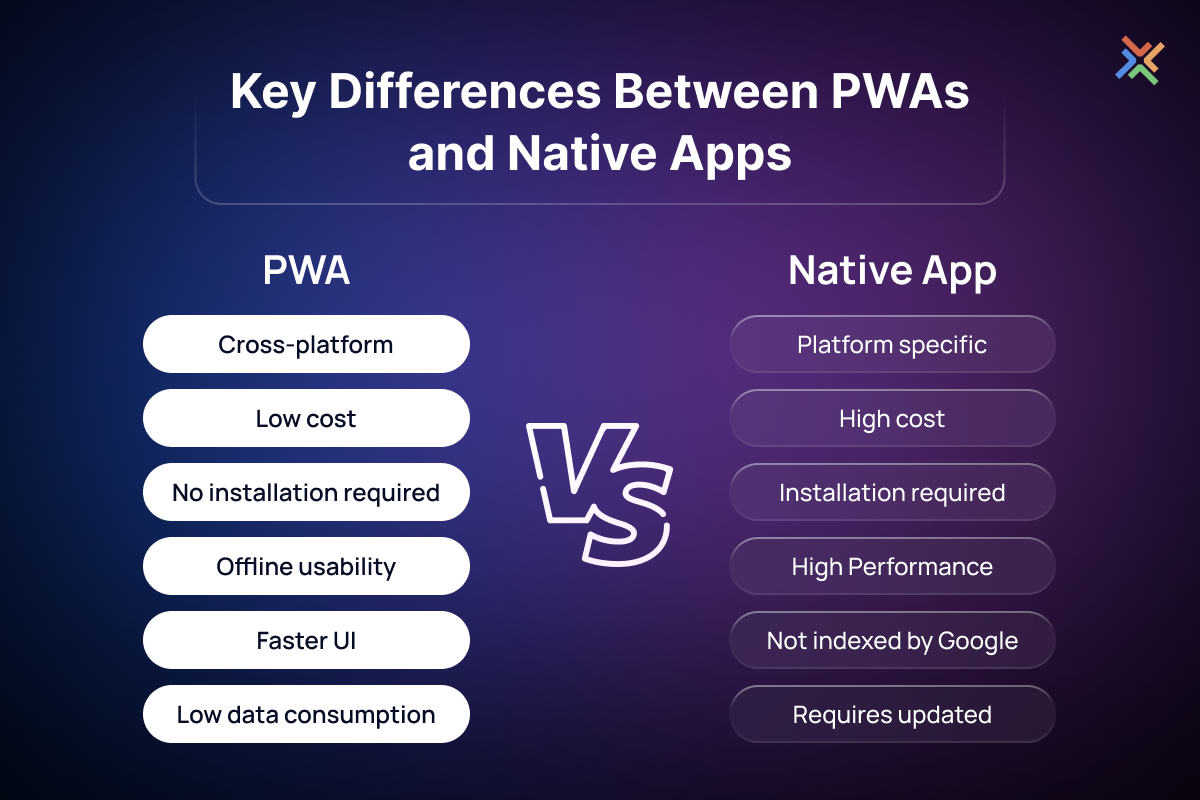
Choosing between PWAs and native apps requires understanding differences in performance, cost, and user experience.
- Installation Process and Accessibility: PWAs can be accessed instantly via browsers, while native apps require downloads and installations from app stores, adding friction.
- Performance and Speed Comparison: Native apps outperform PWAs for heavy processing and graphics-intensive applications, while PWAs offer faster load times for lightweight, content-driven experiences.
- Offline Functionality: Both offer offline functionality, but native apps can run more complex background tasks without connectivity. PWAs rely on caching and service workers.
- Cross-Platform Reach: PWAs work across all modern devices and browsers with a single codebase, whereas native apps require separate development for iOS and Android.
- Storage Requirements: PWAs are lightweight, requiring minimal storage (~25x smaller than native apps). Native apps occupy more space, potentially affecting adoption.
- Development Cost and Maintenance: PWAs are cost-effective due to a single codebase, while native apps involve higher costs and ongoing platform-specific maintenance.
- Marketing and Discoverability: PWAs can be indexed by search engines, boosting SEO. Native apps rely on app store visibility, ratings, and featured placements.
- Security Considerations: Native apps benefit from app store vetting and OS-level security. PWAs require careful implementation of HTTPS, authentication, and secure coding practices.
- Update Mechanism and User Experience: PWAs update instantly without user intervention, while native apps require app store downloads, potentially leading to fragmented user experiences.
When to Choose a Progressive Web App
PWAs are ideal for cost-sensitive, content-focused businesses seeking fast market entry.
- Ideal for Budget-Conscious Businesses: Startups and SMEs seeking mobile app development services in UAE can reduce costs and accelerate market entry with PWAs.
- Best for Quick Market Entry and Broad Reach: PWAs allow businesses to launch fast and reach users on multiple devices without separate development cycles.
- Apps Focused on Content, eCommerce, or Local Services: For applications like e-commerce platforms, news portals, or service directories, PWAs provide an optimal combination of performance, SEO benefits, and user convenience.
- Frequent Updates and SEO Benefits: Businesses with rapidly changing content can leverage instant updates and search engine visibility to drive engagement and conversions.
When to Choose a Native App
Native apps are suited for high-performance, resource-intensive applications requiring deep device integration.
- Ideal for High Performance and Resource-Intensive Apps: Gaming, AR/VR, fintech, and enterprise apps benefit from native apps’ superior performance and hardware integration.
- Apps Requiring Advanced Hardware and Sensors: Applications relying on GPS, camera, biometric authentication, or IoT integration are better served by native apps.
- Loyal User Base and Frequent Usage: Native apps excel in retaining users who interact with the app regularly, providing a premium, responsive experience.
- Strong App Store Presence and Monetization: For businesses seeking revenue through in-app purchases, subscriptions, or app store visibility, native apps offer more monetization avenues.
- Gaming, Fintech, AR/VR, and Multimedia Use Cases: Performance-intensive apps with graphics rendering or real-time processing are best developed natively.
- Maximum Security Requirements: Apps handling sensitive data, like banking or healthcare solutions, benefit from native apps’ OS-level security and app store compliance.
Emerging Hybrid App Strategies for 2026
Hybrid approaches combine the advantages of PWAs and native apps for cost-effective and scalable mobile app solutions.
- Start with a PWA for Rapid Validation: Businesses can quickly launch PWAs to test market fit, gather user feedback, and validate ideas without significant investment.
- Build a Native App for Loyal Users: Once a user base is established, native apps can provide premium performance, additional features, and a richer UX.
- Maintain Both to Serve Different User Segments: Some companies adopt dual strategies—PWA for casual or new users, native apps for high-engagement, high-value users.
- Cost Optimization and Performance Balance: Hybrid approaches allow UAE businesses to balance development cost, reach, and performance, leveraging the strengths of both PWAs and native apps.
Market Trends Shaping Mobile Apps in 2026
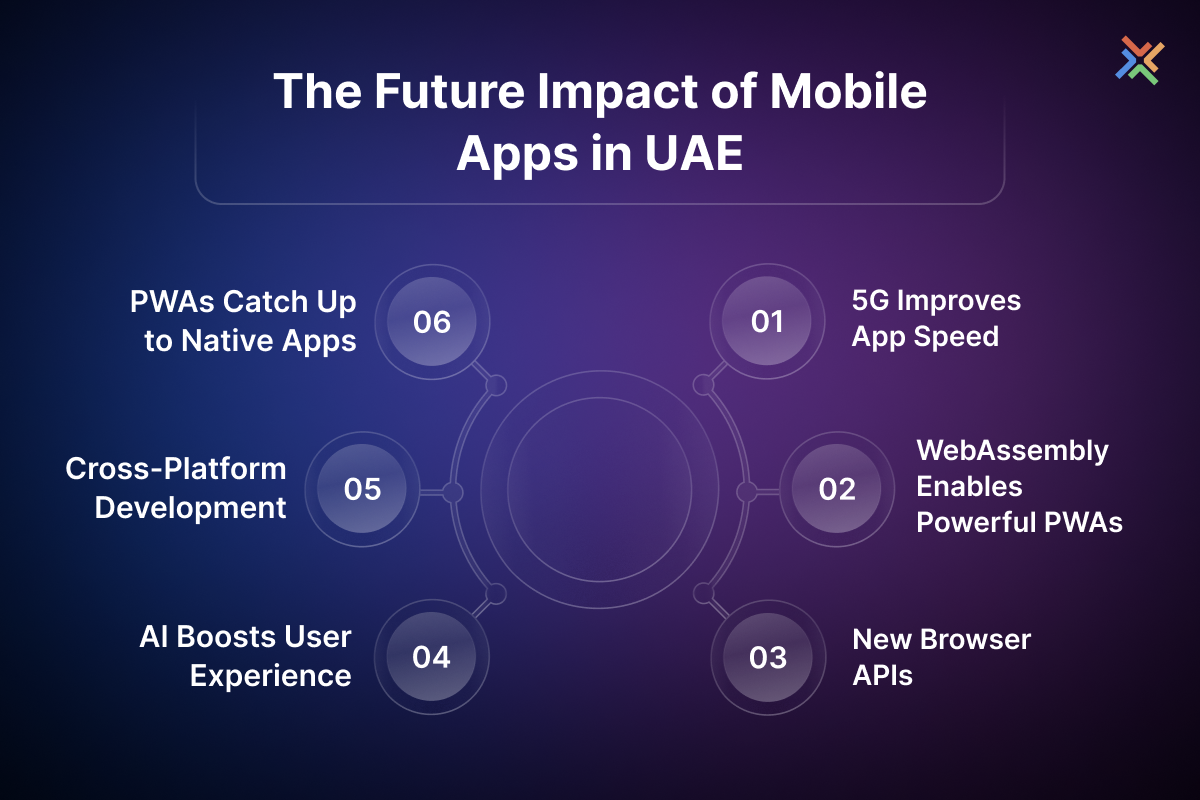
Technology advancements are narrowing the gap between PWAs and native apps, creating more strategic options for UAE businesses.
- 5G Adoption Narrowing PWA-Native Performance Gap: Faster network speeds enhance PWA performance, making them increasingly competitive with native apps for real-time applications.
- WebAssembly for Complex Applications: WebAssembly allows PWAs to run computationally intensive tasks previously reserved for native apps, expanding their potential use cases.
- Expansion of Browser APIs for PWAs: Modern browsers provide access to device features such as camera, microphone, and geolocation, improving PWA functionality.
- AI Integration in Mobile Apps: AI-powered features like personalized recommendations, chatbots, and predictive analytics are now feasible in both PWAs and native apps, enhancing user engagement.
- Cross-Platform Frameworks (Flutter, React Native): Frameworks like Flutter and React Native allow businesses to combine native performance with single-codebase convenience, bridging the gap between PWAs and native apps.
Choose the Right Mobile App with WDCS Technology
In 2026, UAE businesses face a strategic decision: adopt Progressive Web Apps for cost-effective, fast-to-market solutions or invest in native apps for high-performance, feature-rich experiences.
PWAs deliver faster load times, smaller storage requirements, and SEO benefits, making them ideal for content-driven, e-commerce, and marketing-led applications. Native apps, on the other hand, excel in hardware-intensive, resource-heavy scenarios like gaming, fintech, AR/VR, and enterprise solutions.
The best choice depends on your business goals, budget, and target audience. WDCS Technology provides expert guidance to help you navigate this decision. With end-to-end mobile app development services in UAE, including PWA, native, and hybrid app solutions, WDCS ensures your app maximizes user engagement, drives conversions, and strengthens your brand presence.
Whether you aim for rapid market entry, cross-platform reach, or premium performance, WDCS Technology can tailor a strategy that aligns with your objectives. Partner with WDCS to launch your app confidently, optimize ROI, and stay ahead in the competitive UAE market.
Take the next step: Connect now to hire the best app developer in UAE and transform your digital presence with WDCS Technology today.
Frequently Asked Questions (FAQs)
- Are PWAs Replacing Native Apps?
PWAs complement, but do not fully replace, native apps. They are ideal for content-driven, cost-conscious solutions, while native apps remain superior for high-performance, hardware-intensive use cases.
- Can PWAs Work Offline?
Yes. PWAs utilize service workers and caching to provide offline functionality, allowing users to interact with content without a continuous internet connection.
- Are PWAs Secure?
PWAs are secure when developed with HTTPS, authentication mechanisms, and robust coding practices, but they cannot leverage OS-level security available to native apps.
- Which Is Cheaper to Develop: PWA or Native App?
PWAs are more cost-effective due to a single codebase and cross-platform reach, while native apps require separate builds for iOS and Android, increasing costs.
- Can I Have Both a PWA and Native App?
Yes. Businesses often deploy PWAs for rapid market entry and casual users, while offering native apps for high-engagement users requiring advanced features.
- How Long Does It Take to Build a PWA vs Native App?
PWAs can typically be developed in 2–6 months, while native apps require 4–12 months depending on complexity, platform requirements, and testing.
Launch Your Mobile App with WDCS Technology
Whether you need a fast, cost-effective PWA or a high-performance native app, WDCS Technology provides end-to-end mobile app development services in UAE. Partner with our experts to maximize user engagement, boost conversions, and launch your app confidently in 2026. Hire mobile app developer in UAE today and transform your digital presence.