Headless CMS vs Traditional CMS: Which Is Better for Scalable Websites?
February 17, 2026

Ayush Kanodia
.jpg?w=1920&q=75)
By 2026, providing fast, personalized, and omnichannel digital experience is not a choice, but a strategic decision. Selection of a content management system (CMS) has implications on scalability, performance, security and revenue increase. It is estimated to grow to 3.8 billion in the global headless CMS market by 2032 with 82.9% of businesses indicating increased speed of processes, better KPIs, and growth following adoption.
To the founders, decision makers, as well as to the B2B consumers seeking web development services in UAE, it is important to learn the trade-offs of traditional and headless CMSs. Conventional websites such as WordPress and Drupal are still relevant to small and straightforward websites; they are cost-effective, user-friendly, and do not need much technical knowledge.
However, in the case of an enterprise that is tasked with managing content in a variety of channels, monolithic systems are slow, opaque, and susceptible to vendor lock-in. Headless CMSs can address these concerns by decoupling the presentation and content, allowing greater speed, improved security and actual multi-platform flexibility.
This blog details the distinctions, advantages and the business factors of both types of CMS and also gives a realistic framework to assist you in choosing the correct system to scale up and future-proof websites.
What is a Content Management System (CMS) and What Matters in 2026
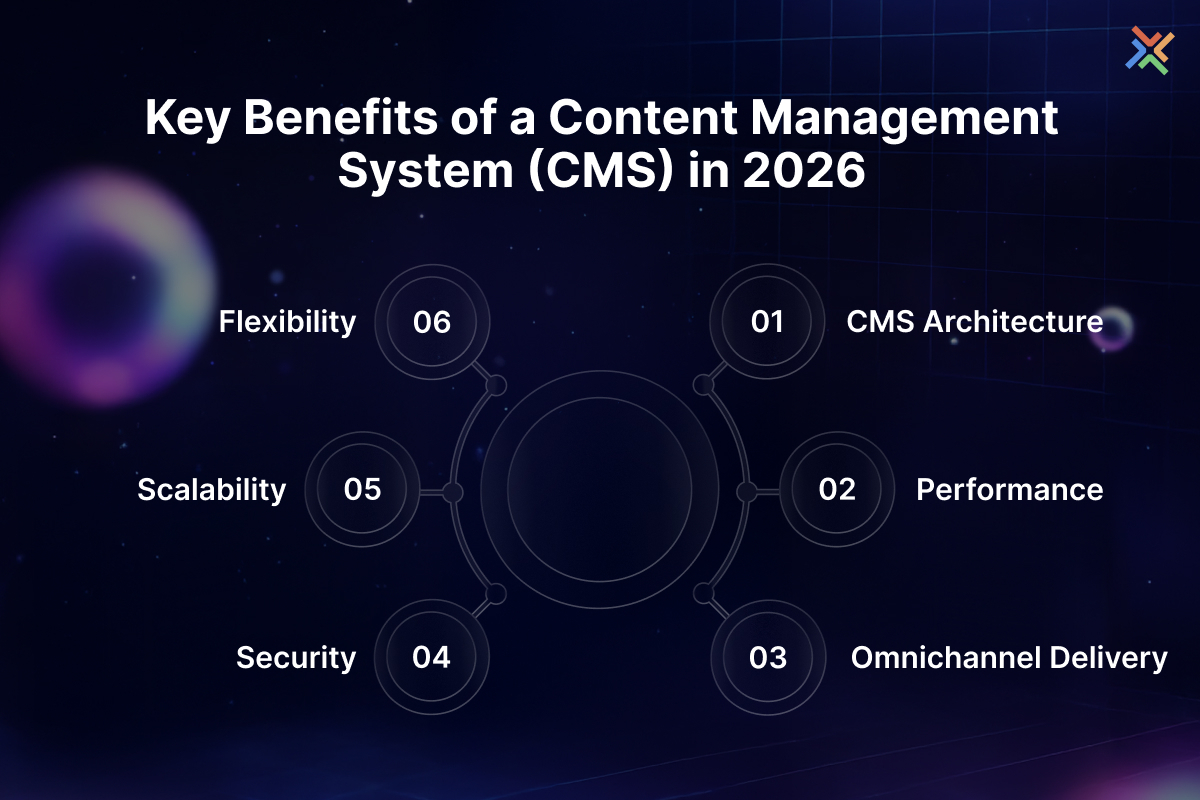
A CMS is a software which enables organizations to build, administer and distribute digital material effectively. A CMS essentially includes a storage layer, editorial interface, and publishing workflow of websites or applications.
The CMS architecture is the particular aspect that influences not only your content management but also the scale with time, performance between devices, and integration of third-party tools.
The primary factors to be considered when choosing CMS in 2026 are:
- Performance: Rapid page load speed has a direct impact on user experience, search engine optimization and conversion. Headless CMS designs separate content and deliver it through lightweight APIs to bespoke frontends lowering bloat and enhancing responsiveness.
- Omnichannel Delivery: The current business publishes on the Internet, mobile apps, voice interfaces, and IoT devices. The CMS should be flexible to deliver the same content in all channels.
- Security: Headless systems are more secure compared to traditional CMS platforms due to their decoupled nature and hence increase in cyber threats.
- Scalability: Your CMS should support expansion as web sites scale in both traffic, complexity and content volume without having to spend money on expensive downtime or architectural adjustments.
- Flexibility: Developers are becoming more and more insistent on the power to consume modern frameworks, APIs and integrations to create unique and performant digital experiences.
It all depends on the complexity of your project, the growth pattern, and the availability of technical resources when it comes to choosing between a traditional and a headless CMS.
Traditional CMS Explained: Structure, Advantages, and Limitations
Traditional CMS systems are sometimes described as monolithic CMS systems that combine content management with database storage and frontend rendering into one tightly-coupled system. Some of the popular ones are WordPress, Drupal and Joomla.
Monolithic architecture: How content, database, and front end are tightly coupled
Traditional CMS has an integrated content management backend, database and presentation layer. Although this is easy to start up and create content, it restricts flexibility. All modifications, such as the expansion to additional platforms, implementation of innovative analytics, and the expansion to more brands, demand changes to the CMS itself, which can be costly and time-intensive.
Popular traditional CMS examples: WordPress, Drupal, Joomla
- WordPress: Easy to use and has a vast application as a platform; blogging, small business websites, and basic ecommerce.
- Drupal: It is more powerful and scalable than WordPress and has complex customization which needs technical knowledge.
- Joomla: It is less complex than WordPress and more robust than Drupal but has a weaker developer support.
Benefits and challenges for small to medium websites
Benefits:
- Low cost of entry and fast deployment.
- User-friendly WYSIWYG interfaces for non-technical content teams.
- Large plugin ecosystems and community support.
Challenges:
- Poor omnichannel support; content can be based on web presentation.
- Slowed down performance of high-traffic, larger, or multi-site environment.
- Risk due to out-of-date dependencies and security vulnerabilities by vendors.
Headless CMS Explained: Architecture, Flexibility, and Business Benefits
Headless CMS platforms do not bind the content repository on the backend with the presentation layer on the frontend, providing the content to any digital channel as APIs.
Decoupled, API-first architecture for omnichannel publishing
By separating content management from frontend display, headless CMS platforms allow developers to build multiple interfaces, websites, mobile apps, kiosks, or IoT devices while consuming content from a single source. This decoupled approach enables:
- Faster load times and optimized frontends.
- Consistent, centralized content management across channels.
- Flexibility to adopt new technologies without backend constraints.
Popular headless CMS platforms: Contentful, Strapi, Sanity
- Contentful: Enterprise-grade platform with content modeling, analytics, AI-powered personalization, and localization tools.
- Strapi: Open-source CMS offering full customization, API-first content delivery, and flexible integrations.
- Sanity: Real-time collaborative CMS with structured content and a developer-friendly API.
Advantages and limitations for scalable, multi-platform websites
Advantages:
- Omnichannel content delivery and personalization.
- Enhanced security through decoupled architecture.
- Scalability for growing traffic and complex web applications.
- Developer freedom to use modern frameworks like React, Vue, or Angular.
Limitations:
- Requires technical expertise and developer resources for frontend development.
- Higher initial setup costs compared to traditional CMS.
- Content creators may face a steeper learning curve without intuitive visual editors.
Overall, headless CMS platforms are suited for organizations prioritizing scalability, flexibility, and multi-channel performance.
Technical Comparison: Traditional CMS vs Headless CMS
In the decision-making process of a CMS in scalable websites, the architecture has a direct influence on design flexibility, performance, security, and long-term growth. Comparison of the traditional and headless systems on the major technical dimensions listed by top web design company are as follows:
1. Design and Layout Control: Traditional CMS platforms use already designed templates and themes, do not give flexibility to customization and creativity. Conversely, headless CMS gives developers the option of creating entirely custom frontends, which allows them to create distinctive and custom user interfaces on a variety of fronts.
2. Flexibility of Stack Development: Traditional CMSs tend to align teams with a particular programming language, plug-in, or framework making it difficult to innovate. Headless CMS is API-based and language-neutral, which gives developers the option of which frontend stack is the best in terms of performance, scalability, and future-proofing.
3. Content Management: Traditional CMS has WYSIWYG editors, which is simple to use by non-technical users, however restricting reuse of structured content. Headless CMS uses content modeling and allows teams to use structured content that could be dynamically delivered on websites, apps, and IoT devices.
4. Security, Speed, and Performance: Monolithic CMS systems render entire pages on the server side, and this might slow down the loading process besides making the system vulnerable. Headless CMS also runs content through lightweight APIs, which enhances page speed, server load and also improves security since the backend and frontend layers are decoupled.
5. Scalability Issues: The traditional CMS is not always capable of handling massive traffic, multiple channels of publishing, and complicated workflow. Headless CMS can be scaled to support omnichannel content delivery, as well as supporting increased demand without reducing performance.
6. Implications of Cost and Vendor Lock-In: Conventional CMS upgrades can typically take a great deal of developer time, pricey updates to the plugin, and be subject to migration risks. Headless CMS reduces vendor lock-in by storing content separately from its presentation to allow modular expansion and platform changes as time progresses.
Business Use Cases: Which CMS Fits Your Project?
Ideal scenarios for Traditional CMS
- Small business blogs, websites and brochure sites.
- Teams that have insufficient technical capacity.
- Projects that have to be deployed quickly and minimally customized.
Ideal scenarios for Headless CMS
- Enterprise websites with multiple brands, regional sites, and mobile apps.
- Projects requiring omnichannel content delivery and personalization.
- Scalable, high-performance applications needing flexible, modern frontend frameworks.
Hybrid CMS: Combining the best of both worlds
Some organizations adopt hybrid models, using headless APIs for multi-channel delivery while retaining visual editors for content creators. This balances ease of use with scalability and flexibility.
Why Headless CMS Powers Omnichannel and Future-Ready Websites
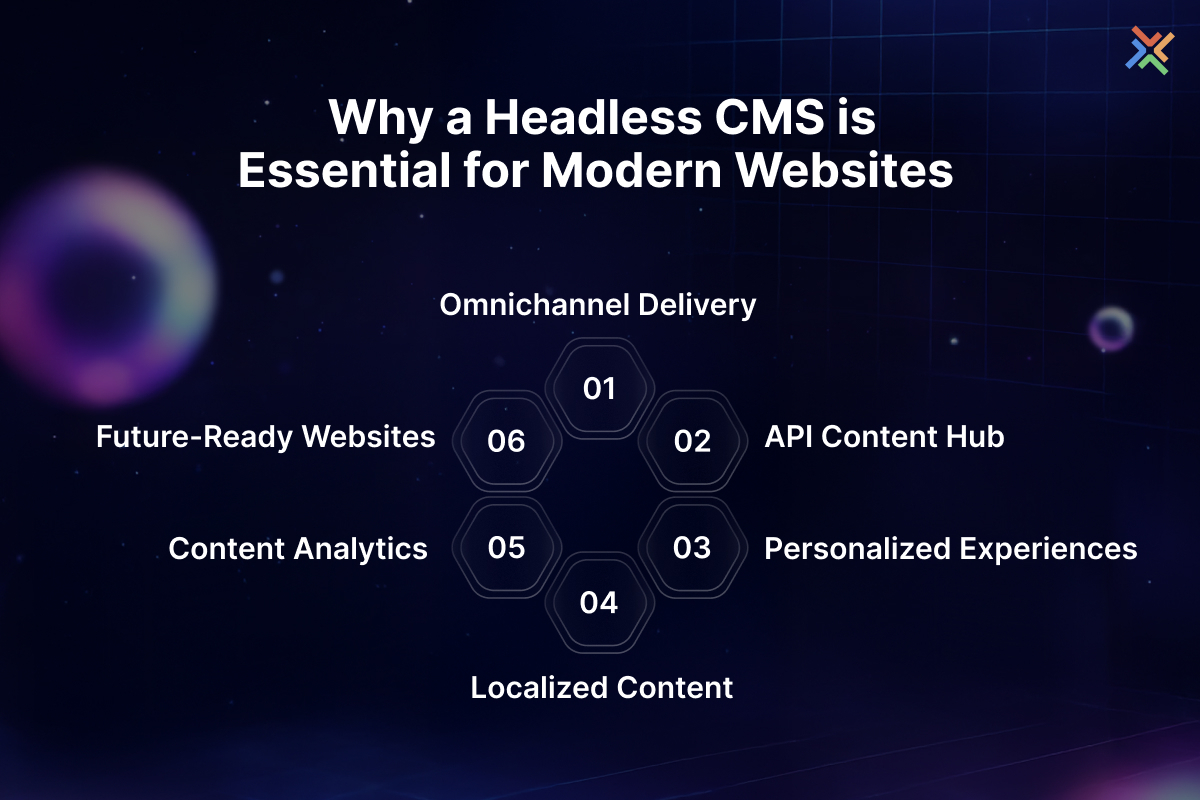
API-driven content delivery across web, mobile apps, and IoT devices
Headless CMS platforms act as a centralized content hub, delivering structured content to any frontend application via REST or GraphQL APIs. This approach ensures consistency across touchpoints while simplifying content updates
How headless CMS supports personalization, localization, and analytics
- Personalization: Tailor content based on user behavior, preferences, or demographics.
- Localization: Centralized management of regional content reduces translation costs and complexity.
- Analytics: Track performance across channels and iterate content strategies based on actionable insights.
Preparing your website for evolving digital experiences
A headless CMS equips organizations to integrate emerging technologies such as AI-driven content recommendations, AR/VR experiences, and IoT interfaces without rearchitecting the backend.
Key Performance Metrics to Evaluate CMS Effectiveness
To choose the right CMS, businesses should evaluate both technical and business performance metrics that directly impact scalability, efficiency, and ROI.
1. Page Speed and Load Times: Faster frontends reduce bounce rates, increase engagement, and improve SEO rankings. Headless CMS architectures often deliver content via APIs to lightweight, optimized frontends, minimizing server load and latency.
2. SEO Optimization and Indexing Performance: Consider URL structure flexibility, metadata control, structured content, and schema support. Headless CMSs can integrate with advanced SEO tools, while traditional CMSs may rely on built-in plugins.
3. Multi-Platform Content Consistency: A CMS should ensure consistent content across websites, mobile apps, IoT devices, and social channels. Headless CMS centralizes content management, reducing errors and enhancing brand consistency.
4. Ease of Maintenance and Updates: Decoupled architectures simplify upgrades, security patches, and plugin management. Traditional CMS platforms often require careful coordination of core, theme, and plugin updates.
5. Security and Compliance Metrics: Track vulnerability exposure, audit logs, user permissions, and compliance with regulations like GDPR or CCPA. Headless CMS reduces attack surfaces by separating backend from frontend.
6. Scalability and Traffic Handling: Measure how well the CMS handles traffic spikes, content growth, and concurrent users. API-first architectures allow horizontal scaling and distributed content delivery networks (CDNs) for global performance.
7. Developer Productivity and Flexibility: Monitor development speed, iteration cycles, and ability to integrate modern frameworks, microservices, or SaaS tools. Headless CMS empowers teams to innovate without being constrained by monolithic structures.
8. ROI and Time-to-Market: Evaluate cost savings from faster deployment, reduced rework, and improved conversion rates. Headless CMS adoption often shortens time-to-market for multi-channel campaigns.
Build Scalable Websites Choosing the Right CMS with WDCS
The selection of CMS is a business choice that will have a direct impact on the scalability of your site, its performance and the ROI of your site in the long run. At WDCS we have a consultative approach where we will analyze your digital architecture, content strategy and technical resources and then suggest a CMS that best fits your business objective.
We have a team of skilled developers who will see that your site is safe, future-proof and will run on all platforms.
A headless CMS provides obvious benefits: scalable architecture, improved performance, enhanced security, and uninterrupted omnichannel provision, which is highly desirable in high growth, complex websites. It is still feasible to use traditional CMS platforms when dealing with small and simple sites, as it is simple, cheap, and easy to use.
With the understanding of the complexity of your project, its traffic, and its growth curve, you can make a strategic decision to achieve the highest efficiency, minimize risk, and make your business a success in the long term.
Ready to hire website developers or collaborate with a web design and development agency in UAE, WDCS offers free architecture evaluations and strategy reviews to inform your choice. Contact us and make sure that you have a scaled and fast website that produces measurable results on business.
Frequently Asked Questions (FAQs)
1. Is a Headless CMS harder to use for content creators than WordPress?
Yes, it often requires a learning curve due to structured content management. However, many headless platforms now provide intuitive interfaces and hybrid models to ease adoption.
2. Can a Headless CMS reduce website loading times and improve performance?
Absolutely. By serving content through APIs to lightweight, customized frontends, headless CMS platforms eliminate bloat and improve page speed.
3. How does omnichannel content delivery work with a Headless CMS?
The CMS acts as a centralized repository. APIs deliver content to multiple platforms like web, mobile, IoT devices ensuring consistency and reducing manual updates.
4. Is a Headless CMS more expensive than a Traditional CMS?
Initial costs can be higher due to development requirements. However, long-term benefits like scalability, security, and multi-channel publishing often justify the investment.
5. Can you switch from a Traditional CMS to a Headless CMS without losing content?
Yes. Migration tools and automated scripts help transfer structured content into headless architectures while minimizing downtime.
6. How secure is a Headless CMS compared to traditional CMS platforms?
Headless CMS reduces attack surfaces by separating backend from frontend, enabling custom security measures and minimizing risks from plugins or themes.
Free CMS Strategy Consultation with WDCS
Choosing the right CMS impacts website performance, scalability, and long-term ROI. At WDCS, our experts assess your architecture, content needs, and technical resources to recommend the ideal CMS solution. Whether you need a headless or traditional system, we provide free strategy reviews and architecture assessments to ensure your website is secure, future-proof, and optimized for multi-channel growth. Contact us today to get actionable insights for building a scalable digital experience.